Calcium Chloride Market 2026: USD 1.9 Billion and Rising
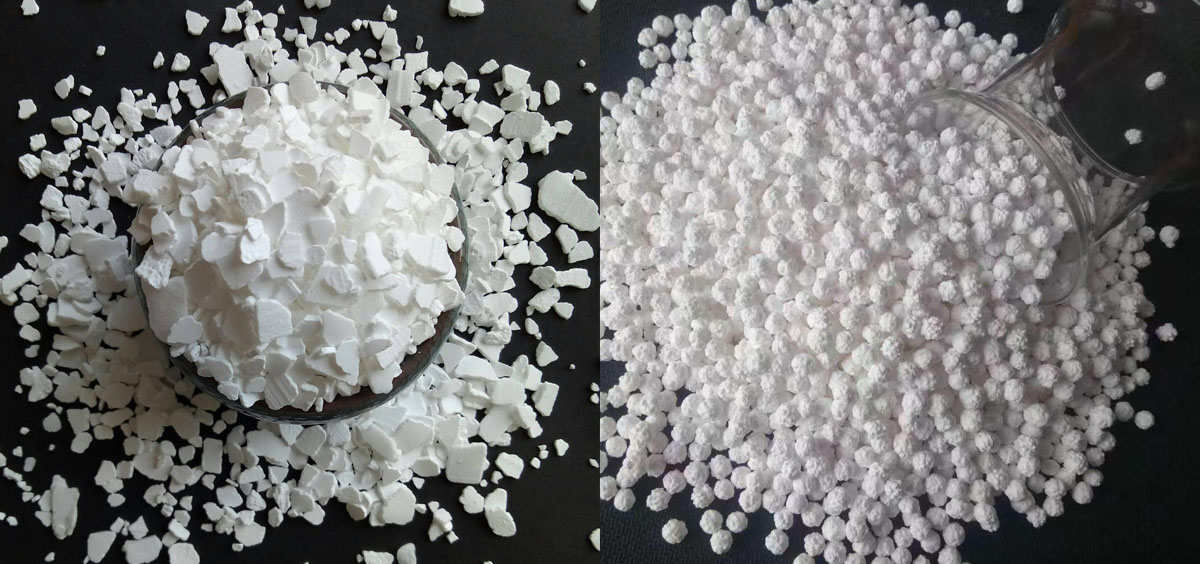
Calcium chloride (CaCl₂, CAS 10043-52-4) is an inorganic salt with a molar mass of 110.98 g/mol for the anhydrous form; the common dihydrate (CAS 10035-04-8) runs 147.01 g/mol. It appears as white flakes, pellets or powder, is odorless and strongly hygroscopic — left open, it will draw moisture from the air until it dissolves in its own water. Solubility is high and dissolution is strongly exothermic. Aqueous solutions are neutral to mildly alkaline.
Calcium chloride rarely makes headlines. It quietly keeps roads passable in February, keeps shale wells flowing in July, drags moisture out of shipping containers, and firms the tomatoes in a can. That spread of uses is exactly why the market keeps growing: no single industry can pull it down.
This year the global calcium chloride market is estimated at USD 1.9 billion, on a path to roughly USD 2.8 billion by 2036 — a CAGR near 4.2%. Other research houses start
from a smaller base (USD 1.33 billion in 2024, growing 5.5% annually to 2032). The gap is a matter of scope, not demand: some studies count only merchant trade, others count captively consumed brine. Either way, the direction is the same.
Industrial grade still holds about 55% of volume, and de-icing plus dust control together absorb 40–45% of demand. Asia-Pacific is the fastest-growing region, with China at about 5.1% and India at 4.9%, driven by road maintenance budgets and construction chemicals.
Prices in Q4 2026: the regional gap is wider than the grade gap
Public price benchmarks put anhydrous and pellet material at roughly USD 356/MT in the United States, USD 252/MT in the Netherlands, USD 220/MT in China and USD 156/MT in Japan. Annual averages for Chinese material are often quoted lower, around USD 145–165/MT. Both numbers are real; they describe different products.
A 74% dihydrate flake from Shandong and a 94% anhydrous granule from the same province are not the same tonne of calcium chloride. Per unit of CaCl₂, one tonne of anhydrous equals about 1.33 tonnes of dihydrate. Freight, palletisation, food-grade certification and bag type widen the spread further. Buyers who compare a Chinese FOB flake quote with a delivered US anhydrous quote are comparing two unrelated numbers, and suppliers on both sides know it.
What matters for 2027 budgeting: lime and hydrochloric acid costs set the floor; winter severity sets the spike; container freight sets the landed number. A mild winter in the northern hemisphere can take 8–12% off spot de-icing prices by March.
Where the volume actually goes
Winter road maintenance. Calcium chloride works at temperatures where rock salt has already given up — its eutectic point is around -50 °C in solution, against roughly -10 °C for sodium chloride. It also releases heat as it dissolves, so it starts working before the plough arrives. Municipal tenders are the single largest seasonal draw, and they are won on certified CaCl₂ content, not on price alone.
Dust control. On unpaved haul roads, calcium chloride keeps the surface slightly damp and binds fines together. Mines, quarries, and construction sites use it because it lasts weeks rather than hours, unlike water tankers.
Oil and gas. Clear brine fluids built on calcium chloride reach densities up to about 1.39 g/cm³ without solids, which makes them the default completion and workover fluid in many basins. Solids-free brine protects the formation; that is why formulators pay a premium for low-turbidity, low-insoluble material.
Construction. As a chloride accelerator it shortens set time in cold weather — with the obvious caveat that chlorides promote rebar corrosion, so it is largely confined to unreinforced concrete, mortars, and winter batching.
Food (E509). Calcium chloride is a firming agent in canned vegetables and fruit, a calcium source in sports drinks and bottled water, a brewing salt for Burton-style water profiles, and the calcium half of the spherification reaction in modern cuisine.
Desiccants and brine. Container desiccant bags, refrigeration brines, and tractor tyre ballast round out a long tail of small but stable demand.
Which grade to buy
| Form | CaCl₂ content | Appearance | Behaviour | Typical use | Watch out for |
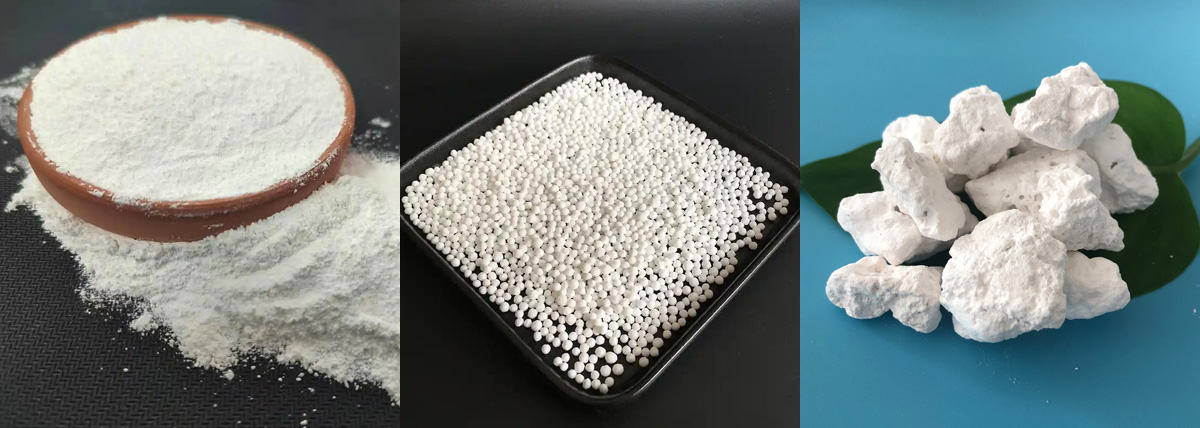
| Dihydrate flake | 74–77% | White flake | Dissolves fast, strong exotherm | De-icing, dust control, brine make-up | Cakes in humid storage; highest freight per unit CaCl₂ |
| Dihydrate pellet / prill | 74–77% | Round, free-flowing | Slower, more even dissolution | De-icing, dust control, desiccant filling | Lower reactivity in very cold brine make-up |
| Anhydrous powder / granule | 94–97% | White powder or granule | Very hygroscopic, high exotherm | Oilfield brine, desiccants, synthesis, blends | Must stay sealed; severe caking risk; drum and jumbo only |
| Food grade (dihydrate or anhydrous) | 74–77% or 94%+ | White, food-licensed line | Same chemistry, tighter limits | E509 firming, beverages, brewing, cheese | Needs food production licence, heavy-metal and insoluble limits |
| Liquid solution | 30–45% | Clear, colourless | Ready to dose, no dissolution step | Brine loops, dust spraying, refrigeration | High freight per unit CaCl₂; freezes in cold weather |
Two practical notes on the table. First, anhydrous is not "stronger" in the sense of being a better buy — it is more concentrated, and the price per tonne of CaCl₂ is what should be compared. Second, food grade is a manufacturing status, not a specification: the same 74% chemistry produced on a non-licensed line cannot be sold as E509, whatever the assay says.
A buyer's spec checklist
CaCl₂ assay, declared as the hydrate actually shipped, plus the calculated anhydrous equivalent
Alkali chlorides (NaCl, KCl) and magnesium chloride, which pull moisture and depress performance in brine
Water-insolubles and turbidity for oilfield and food applications
pH of a 1% solution, typically 7.5–9.5 for industrial grade
Sulphate and heavy metals where food or pharma channels are involved
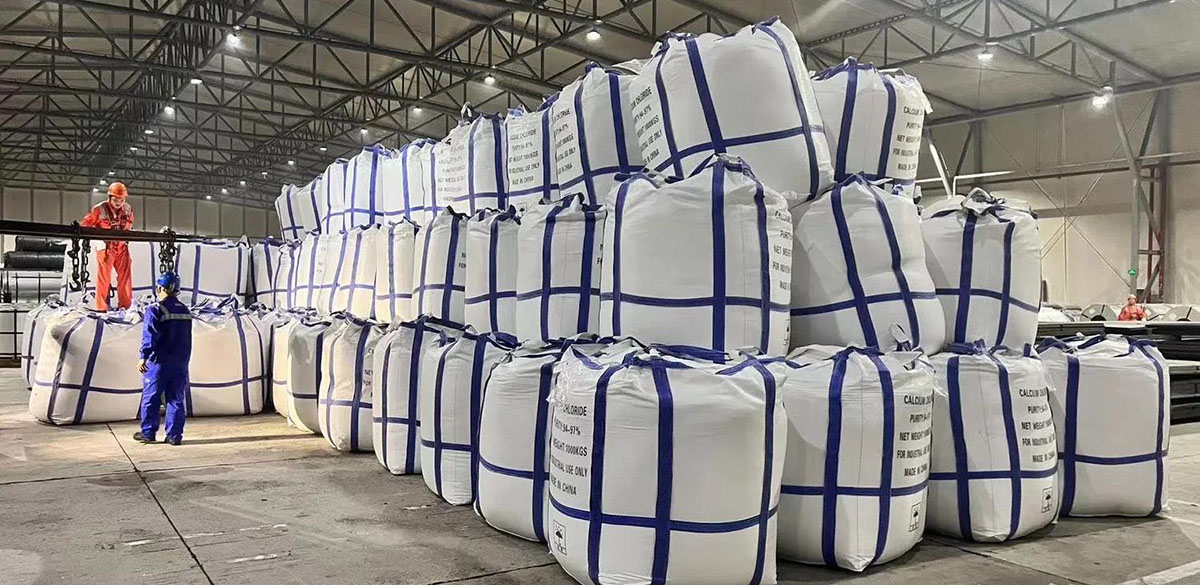
Packaging: 25 kg PP/PE bags, 1000 kg jumbo, or lined drums for anhydrous
Documents: CoA per lot, MSDS, and for China-origin goods, compliance with GB/T 26520-2021 for industrial grade or GB 1886.45 for food additive grade
Customs: HS 2827.20, which covers calcium chloride regardless of hydrate form
FAQ
Is 94% anhydrous better than 74% flake?
It is more concentrated, not automatically more suitable. De-icing crews usually prefer flake because it dissolves faster on contact with snow; brine plants and oilfield formulators prefer anhydrous because they are paying to ship less water.
Why is Chinese calcium chloride so much cheaper?
Partly grade and packaging, partly scale — Shandong and Jiangsu producers sit on cheap salt, lime and hydrochloric acid. But the FOB-to-landed gap on a 20-foot container of 25 kg bags can be USD 60–90/MT once freight, bags and port charges are added. Price the landed cost, not the FOB.
Can industrial grade be used as a food additive?
No. Food-grade material must come from a licensed line with declared heavy-metal and insoluble limits, and be traceable lot by lot. Repackaging industrial flake into food bags is one of the more common compliance failures in this product.
Does calcium chloride still work at -30 °C?
In solution, yes — its eutectic is near -50 °C. In practice, snowmelt dilutes the brine and performance falls off, which is why crews pre-wet the salt rather than spread dry CaCl₂ alone.
Buying calcium chloride for 2027
If you are locking in winter tonnage, the window is now: Q4 is when northern hemisphere distributors fill tanks, and prices firm from November. Confirm the hydrate form, the assay basis, the packaging and the document set before you compare a single number — then ask for a landed cost to your port.
Shenzhou chemical supplies industrial and food-grade calcium chloride from Shandong and Jiangsu in flake, pellet, powder and anhydrous grades, with CoA, MSDS and pre-shipment samples on request. Send your specification and target volume, and we will come back with a landed price and a loading plan within one working day.