What are the differences between citric acid monohydrate and citric acid anhydrous?
China is a major global exporter of citric acid. The two products, aqueous and anhydrous, have already shown a clear differentiation in foreign trade orders. The aqueous citric acid has a larger shipment volume and is mainly targeted at the beverage and liquid food markets, with outstanding cost-effectiveness; the anhydrous citric acid has a higher unit price and is mainly supplied to customers in Europe and the United States in the fields of medicine and solid powder. These two seemingly similar products actually have significant differences.
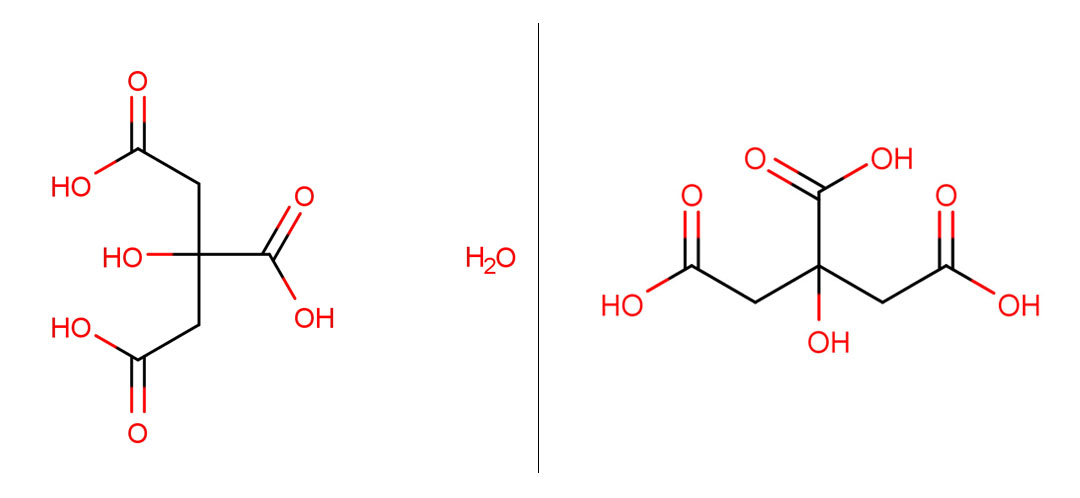
Chemical structure: The presence or absence of water molecules is the core difference.
From the chemical formula, the molecular formula of monohydrated citric acid is C₆H₈O₇・H₂O, and it contains one water molecule in its crystal structure; while the molecular formula of anhydrous citric acid is C₆H₈O₇, and it does not contain any water molecules in the crystal. This structural difference is like two "twin" substances, although the core active components are the same, but the crystal binding states are different, thereby affecting their overall physical properties and applicable scenarios.
It should be noted that when monohydrated citric acid is heated to approximately 78℃, the water molecules in the crystal lattice will completely evaporate and transform into anhydrous citric acid. This property allows the two to transform into each other under specific temperature conditions, and it is also the core basis for precise control of crystal morphology in industrial production.
Physical properties: Appearance, solubility, and hygroscopicity each have their own characteristics.
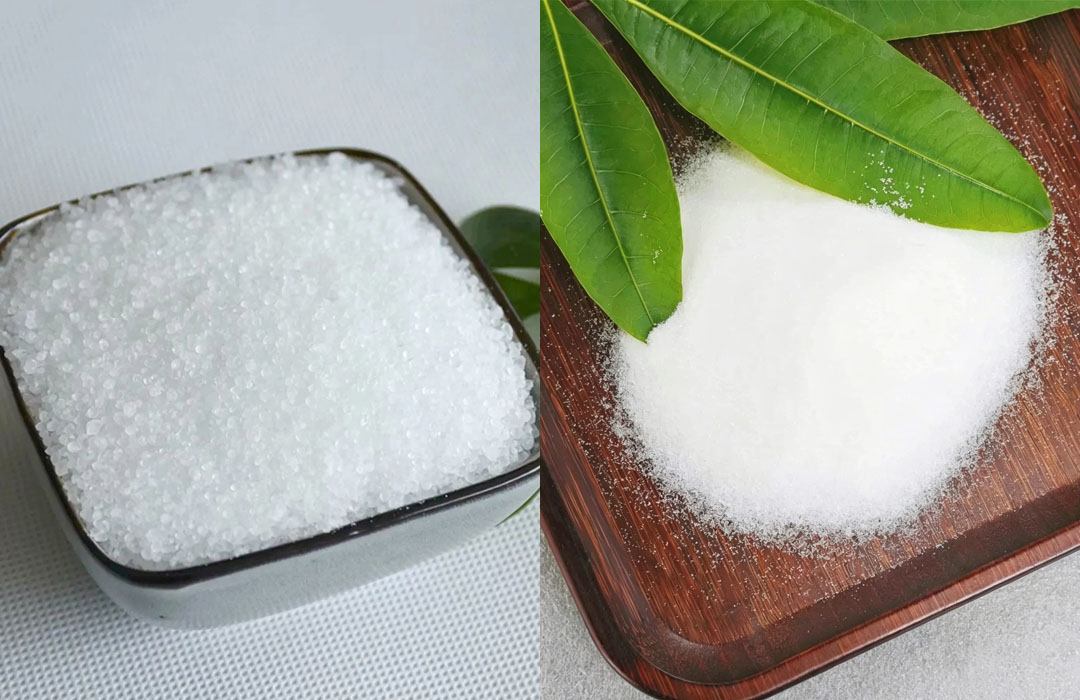
In terms of appearance, monohydrate citric acid usually appears as colorless transparent prismatic crystals or white crystalline particles. The crystal particles are larger and more regular in shape, and the powder has better fluidity; anhydrous citric acid is mostly fine white crystalline powder with smaller grains and a more fluffy overall texture. It is difficult to precisely distinguish them with the naked eye; further identification is required based on solubility and hygroscopicity.
In terms of solubility, both are highly soluble in water. However, at the same temperature under normal conditions, the solubility of monohydrate citric acid is slightly higher than that of anhydrous citric acid, and the dissolution rate is faster, with a stronger affinity for water. In the production scenarios of rapid mixing of beverages and liquid foods, the dissolution advantage of monohydrate citric acid is more prominent.
Hygroscopicity is the most critical and easily confused property difference between the two: anhydrous citric acid has stronger hygroscopicity and is prone to absorbing moisture from the air in humid environments, resulting in moisture absorption and agglomeration; while the crystal of monohydrate citric acid has already combined and fixed the crystalline water, the structure is stable, and it is not prone to secondary moisture absorption. Under normal storage conditions, its stability is better and it is less likely to agglomerate. This property directly determines the storage requirements of the two and the compatibility of high-end powder products.
Production Process: Minor Temperature Differences Determine the Final Form
The raw materials for both monohydrate citric acid and anhydrous citric acid are exactly the same - they are all made from carbon compounds such as corn starch through core processes such as fermentation by Aspergillus niger, extraction, purification, and concentration. The main difference between the two lies in the precise control of the crystallization temperature.
When producing monohydrate citric acid, the crystallization temperature is strictly controlled below 36℃, allowing citric acid molecules to stably combine with water molecules to form regular crystals containing water of crystallization; when producing anhydrous citric acid, the crystallization temperature is raised to above 40℃. The high-temperature environment can prevent water molecules from entering the crystal structure, resulting in a high-purity anhydrous citric acid product that is completely free of water of crystallization. The industry critical conversion temperature is 36.6℃, which is also the precise standard for distinguishing the two products in industrial production.
Application fields: Each has its own focus, and precise selection based on needs
Although citric acid in one form and anhydrous citric acid share similar core chemical properties, both having functions such as pH regulation, metal chelation, and antibacterial and preservative properties, their application scenarios are clearly divided by physical properties differences.
In the food industry, citric acid in one form dissolves quickly, has a higher cost-effectiveness, and is less prone to caking during storage, and is widely used in various liquid foods, such as carbonated beverages, juices, jams, wines, syrups, etc., being the most commonly used pH regulator in the food industry.
Anhydrous citric acid has a higher effective acid content, higher product purity, and zero moisture content, suitable for products with strict requirements for moisture content. Although it has strong hygroscopicity and requires sealed and moisture-proof storage, it is still the preferred choice for solid beverages, effervescent tablets, dry powder seasonings, baking powder bodies, etc., effectively preventing product deterioration and failure due to residual moisture.
In the pharmaceutical field, anhydrous citric acid, due to its high purity and anhydrous nature, is mostly used as an excipient and pH regulator in solid preparations such as capsules and oral tablets; while citric acid in one form, with stronger stability, is suitable for various liquid preparations such as oral solutions.
In the industrial cleaning field, both can be used as chelating agents to complex calcium and magnesium ions in water and remove equipment scale. Among them, anhydrous citric acid, due to its no moisture impurity, is more suitable for the production of concentrated industrial cleaning agents and high-end precision cleaning reagents.

Summary: The key to the choice lies in scene adaptation.
The only difference between monohydrate citric acid and anhydrous citric acid lies in their crystal water content. There is no distinction in terms of quality. If you are looking for products that dissolve quickly, offer high cost-effectiveness, are suitable for regular storage, and are in liquid form, then monohydrate citric acid is the preferred choice. If you need to strictly control the moisture content in the formula, require high purity, produce solid powder products, and use high-end preparations, then anhydrous citric acid should be selected. At the same time, ensure proper sealing and moisture-proof storage.