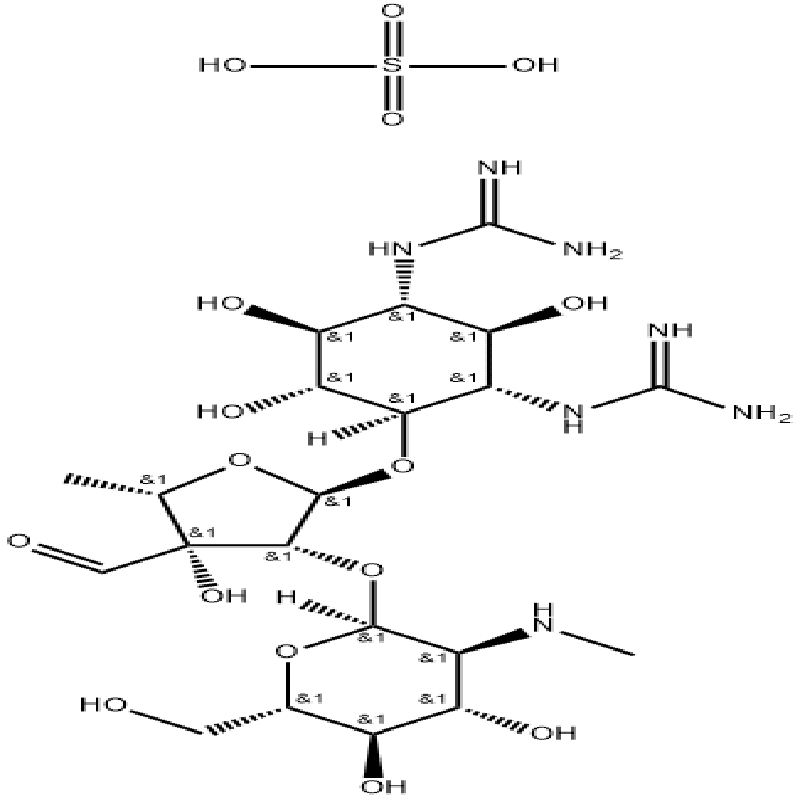
Streptomycin sulfate CAS#3810-74-0
Streptomycin sulfate CAS#3810-74-0
Streptomycin sulfate represents the sulfate derivative of streptomycin, an antibiotic biosynthesized by the soil-dwelling actinomycete Streptomyces griseus. Notably, streptomycin was the first chemotherapeutic agent developed with proven efficacy against tuberculosis.Administered exclusively via intramuscular injection, this medication has limitations for long-term use. Among antibiotics derived from Streptomyces and intended for parenteral (extra-gastrointestinal) administration, streptomycin stands out for its high effectiveness and relatively low toxicity.Functioning as a bactericidal agent, its mechanism of action likely involves direct interaction with bacterial ribosomes to hinder protein synthesis. It exerts its primary therapeutic effect on extracellular tuberculosis bacteria, including those residing in cavitary lesions.
Streptomycin sulfate Chemical Parameters
Melting point | >185°C (dec.) |
alpha | -79~-88°(20℃/D)(c=1,H2O)(calculated on the dried basis) |
density | 1.2302 (rough estimate) |
refractive index | -85 ° (C=1, H2O) |
storage temp. | 2-8°C |
solubility | H2O: 0.1 g/mL, clear |
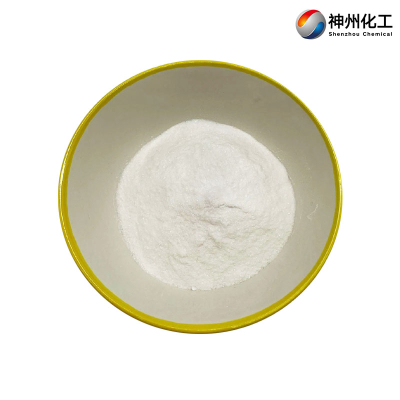
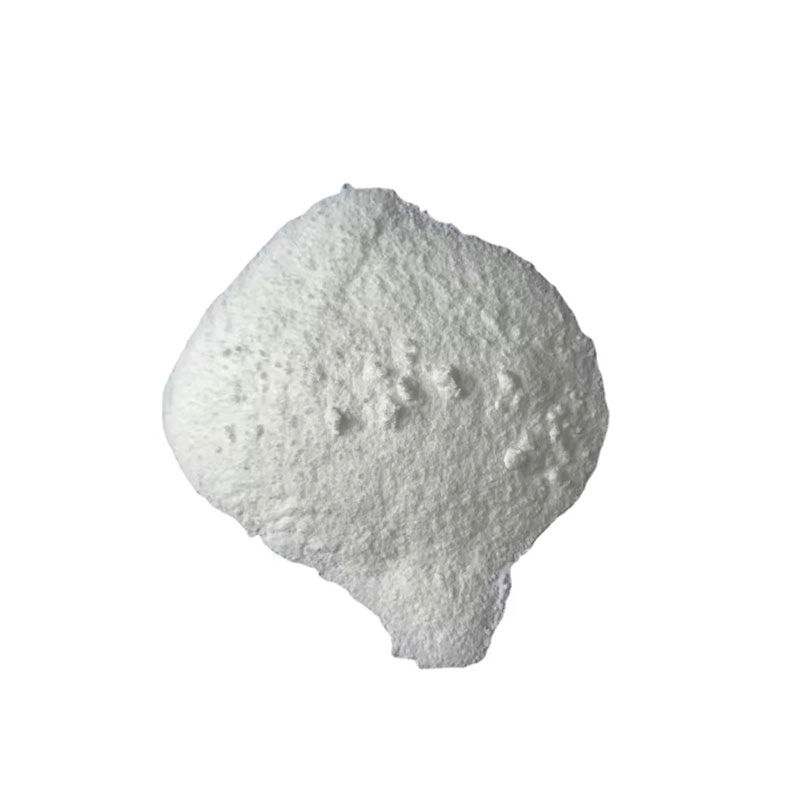
form | powder |
color | white to off-white |
PH | |
Water Solubility | >=0.01 g/100 mL at 18 ºC |
Merck | 148826 |
BRN | 3894995 |
Specific Activity | ≥720IU/g (dry basis) |
Stability: | Stable. Incompatible with strong oxidizing agents. |
InChIKey | QTENRWWVYAAPBI-YZTFXSNBSA-N |
LogP | -1.523 (est) |
CAS DataBase Reference | 3810-74-0 |
EPA Substance Registry System | Streptomycin sulfate (3810-74-0) |
Safety Information | |
Hazard Codes | Xn,Xi |
Risk Statements | 22-36/37/38-63-42/43 |
Safety Statements | 26-36-36/37-45-22-60 |
WGK Germany | 3 |
RTECS | WK4990000 |
F | 3 |
TSCA | Yes |
HS Code | 29412000 |
Streptomycin sulfate CAS#3810-74-0 Application
Streptomycin sulfate exhibits antibacterial activity against the majority of Gram-positive and Gram-negative bacteria. It is particularly effective against a range of Gram-negative pathogens, including Escherichia coli, Salmonella spp., Pasteurella spp., Brucella spp., Klebsiella pneumoniae, Shigella dysenteriae, Clostridium difficile, and Burkholderia thuringiensis.As the preferred agent for combating Mycobacterium tuberculosis, it exerts potent effects on these pathogens. At low concentrations, it demonstrates strong antibacterial activity, while high concentrations elicit a bactericidal response. Due to its limited cell penetration—with only 10% able to enter somatic cells—it is ineffective against intracellular Mycobacterium tuberculosis and solely targets extracellular strains.Its bactericidal action is more pronounced against actively replicating bacteria than dormant ones. Unlike penicillin, its bactericidal rate correlates directly with drug concentration. The agent achieves optimal antibacterial efficacy at a pH of 7.8, with its effectiveness diminishing significantly when the pH falls below 6.
Factory Show
As an ISO-certified chemical exporter with 15 years of professional experience, we leverage leading production technology, advanced equipment, and a professional team to provide high-quality chemical raw materials to over 2,000 companies worldwide. Our products are widely used in pharmaceuticals, agriculture, food manufacturing, and industrial production, with business spanning six continents. We are committed to providing reliable supply chain support and solutions to customers across various industries.