


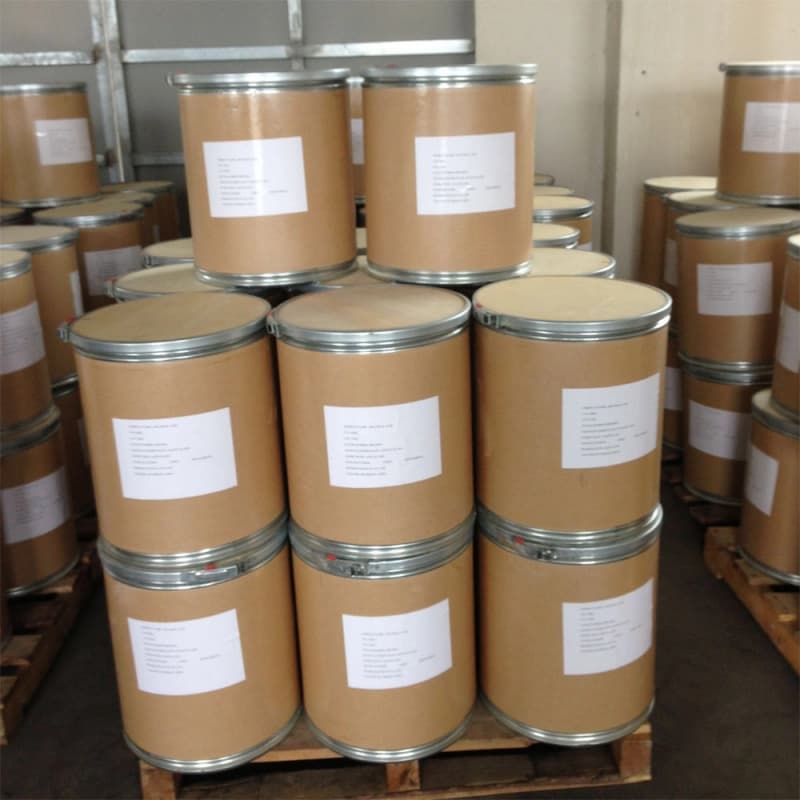
Guar gum CAS#9000-30-0
Guar gum is a plant-derived gum obtainable from the fruits of carob trees and guar beans. Carob trees are perennial shrubs primarily thriving along the Mediterranean coastline. Guar beans, on the other hand, are annual leguminous plants that grow mainly in desert-like regions such as India, Pakistan, and Texas in the United States, and they adapt well to environments with significant day-night temperature variations and ample rainfall. Currently, the guar gum utilized by Chemicalbook is mostly extracted from guar beans. Once mature, guar beans are peeled and then transported to grinding and processing facilities. Through thermochemical treatment, the beans are separated into endosperm flakes, germs, and hulls. The germs, which are rich in protein, are frequently used as animal feed, while the endosperm flakes undergo further processing at the facilities to produce guar gum.
Guar gum Chemical Properties
Melting point | >220°C (dec.) |
alpha | D25 +53° (1N NaOH) |
density | 0.8-1.0 g/cm3 |
refractive index | 1.34 |
FEMA | 2537 | GUAR GUM (CYAMOPSIS TETRAGONOLOBUS (L.)) |
storage temp. | Hygroscopic, -20°C Freezer, Under inert atmosphere |
solubility | It yields a mucilage of variable viscosity when dissolved in water, practically insoluble in ethanol (96 per cent). |
form | Free Flowing Powder |
color | Yellow-white |
Odor | Odorless |
PH | 5.0-7.0 (25°C1% in water) |
Merck | 13,4588 / 13,4587 |
Stability: | Stable. Combustible. A mixture of air and finely-divided powder is potentially explosive. Incompatible with strong oxidizing agents. |
EPA Substance Registry System | Guar gum (9000-30-0) |
Safety Information
WGK Germany | 1 |
RTECS | MG0185000 |
HS Code | 1302.39.0090 |
Hazardous Substances Data | 9000-30-0(Hazardous Substances Data) |
Toxicity | LD50 in male, female rats (g/kg): 7.35, 6.77 orally (Graham) |
Guar gum CAS#9000-30-0 Application
Derived from the seed kernels of Cyamopsis tetragonoloba, guar gum features a mannose-to-galactose ratio of roughly 2:1. It disperses easily in cold water to create viscous sols, with viscosity increasing further when heated. At 25°C, a 1% solution exhibits a viscosity range of 2,000 to 3,500 centipoise. Classified scientifically as guaran, it serves as a multifunctional thickener and stabilizer in food products like ice cream, baked goods, sauces, and beverages, typically used at concentrations between 0.1% and 1.0%.
Factory Show
As an ISO-certified chemical exporter with 15 years of professional experience, we leverage leading production technology, advanced equipment, and a professional team to provide high-quality chemical raw materials to over 2,000 companies worldwide. Our products are widely used in pharmaceuticals, agriculture, food manufacturing, and industrial production, with business spanning six continents. We are committed to providing reliable supply chain support and solutions to customers across various industries.


