Orthoboric acid CAS#10043-35-3
CAS Number: 10043-35-3
Chemical Formula: BH3O3
Synonyms:
TRIS-BORATE-EDTA DISODIUM
Ant flip
basilitb
Appearance: Colorless transparent liquid
HS Code: 28100090
MOQ (Minimum Order Quantity): 1 FCL (Full Container Load)
Products Description of Orthoboric acid CAS#10043-35-3
Boric acid refers to crystalline compounds formed by the dissolution of boron trioxide in water. As an inorganic acid, it mainly exists in three forms: tetraboric acid (H₂B₄O₇, also called pyroboric acid), metaboric acid [(HBO₂)ₙ], and orthoboric acid (H₃BO₃, also known as orthoboric acid). Among these, orthoboric acid has the highest water content and is the most stable.
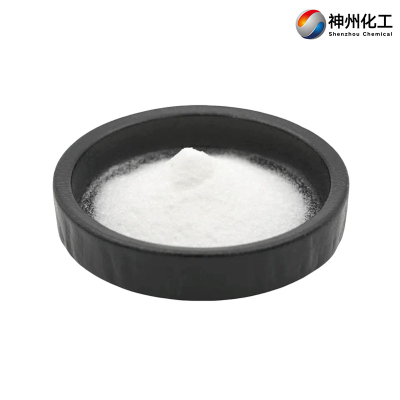
Commonly referred to simply as boric acid, orthoboric acid appears as white powdery crystals or shiny, three-axis oblique flaky crystals. It has a slight bitter taste, feels greasy to the touch, and is odorless. It is soluble in water, ethanol, glycerin, ethers, and essential oils, with its aqueous solution showing weak acidity. When heated to 70–100℃, orthoboric acid gradually dehydrates to form metaboric acid; at 150–160℃, it converts to pyroboric acid; and at 300℃, it decomposes into boric anhydride (B₂O₃).
Boric acid is toxic to humans. Its solubility in water varies with temperature: 2.77 (0℃), 3.65 (10℃), 4.87 (20℃), 5.74 (25℃), 6.77 (30℃), 8.90 (40℃), 11.39 (50℃), 14.89 (60℃), 23.54 (80℃), and 38.00 (100℃) (units not specified in original text). As a typical Lewis acid, its aqueous solution is weakly acidic. The addition of hydrochloric acid, citric acid, or tartaric acid can enhance its water solubility, enabling purification through recrystallization.
Parameters
Melting point | 160 °C (dec.) (lit.) |
Boiling point | 219-220 °C (9.7513 mmHg) |
density | 1.440 g/cm3 |
bulk density | 400-600kg/m3 |
vapor pressure | 2.6 mm Hg ( 20 °C) |
refractive index | n20/D 1.330-1.340 |
storage temp. | Store at +5°C to +30°C. |
solubility | H2O: soluble |
pka | 8.91±0.43(Predicted) |
form | working solution |
color | ≤10(APHA) |
Specific Gravity | 1.435 |
PH | 3.6-4.4 (25℃, saturated solution in H2O) |
Odor | Odorless |
PH Range | 3.8 - 4.8 |
Water Solubility | 49.5 g/L (20 ºC) |
Sensitive | Hygroscopic |
λmax | λ: 260 nm Amax: 0.05 |
Merck | 14,1336 |
BRN | 1697939 |
Exposure limits | ACGIH: TWA 2 mg/m3; STEL 6 mg/m3 |
InChIKey | KGBXLFKZBHKPEV-UHFFFAOYSA-N |
LogP | -1.09 at 22℃ |
CAS DataBase Reference | 10043-35-3(CAS DataBase Reference) |
NIST Chemistry Reference | B(OH)3(10043-35-3) |
EPA Substance Registry System | Orthoboric acid (10043-35-3) |
Absorption | ≤0.05 at 260 in H2O at 1M |
Safety Information
Hazard Codes | Xi,T,Xn |
Risk Statements | 36/37/38-60-63-62-61 |
Safety Statements | 26-36-53-45-37/39-36/37/39-22-24/25-23 |
WGK Germany | 2 |
RTECS | ED4550000 |
F | 3 |
TSCA | Yes |
HS Code | 28100090 |
Hazardous Substances Data | 10043-35-3(Hazardous Substances Data) |
Toxicity | LD50 orally in rats: 5.14 g/kg (Smyth). |
Product Application of Orthoboric acid CAS#10043-35-3
Boric acid finds application in molecular biology research, including DNA and RNA purification, as well as the preparation of biological buffers and molecular biology reagents. It has been utilized to investigate the toxic effects of boron on the growth and antioxidant system parameters of maize (Zea mays L.) roots. Additionally, boric acid has been employed to study how the time elapsed after boric acid injection influences the absorption of (10)B in different brain regions of adult male rats.
Factory and Equipment Show

Fast delivery time
Inventory 2-3 working days New production 7-10 working days